
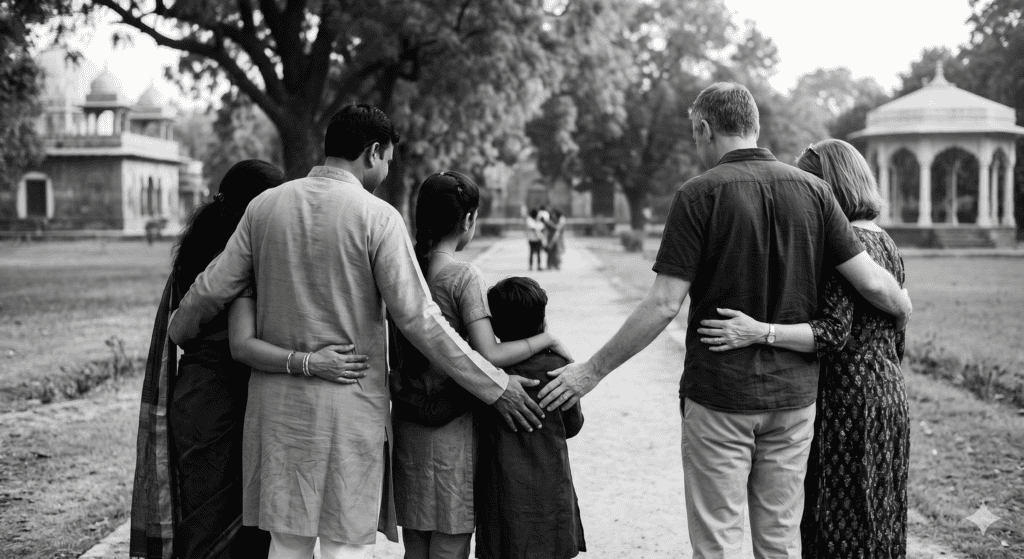
A few years ago, in Delhi, I saw a father who had given up his two-month-old daughter for adoption to an orphanage, meet his child after 35 years. It was an electric moment. The two didn’t exchange any word—the girl had been adopted by a European family and didn’t speak any Hindi, which was the only language the father understood—but the way they looked at each other, overcome with emotions, you could tell that they were quietly making up for lost time.
But let me rewind a bit and place this reunion in context.
I had come in touch with Arun Dohle and Anjali Pawar who were facilitating the reunions between many adoptees living outside India and their biological parents in the country. Over the past 15 years, they have helped 55 adoptees from all over the world trace their biological parents in India. The two agreed to take me along for one of the reunions, which happened in a gurudwara in Delhi. The father was a Sikh, which is why he insisted that their first meeting happen at a gurudwara. His daughter had been brought up as Christian. This was that reunion.
ALSO READ: Complex Laws, Bureaucratic Tangles Make Adoption A Long, Painful Journey For Indians
The father just kept looking at his daughter awkwardly for minutes on end and she, with a lot of hesitation, tried to make contact, by touching him, stepping forward to embrace him. She went on to visit his house and was welcomed by everyone in it. She may not have found answers to all her questions but, thanks to Dohle and Pawar, she had taken a huge stride towards finding a closure.
Three years later, as I got in touch with them, Dohle and Pawar told me they now have a website to help adoptees from India search their parents. This is how visitors to adopteerightscouncil.org are greeted: ‘Are you an Indian adoptee in search for answers about your adoption, your story, and your Indian roots? Are you looking for your Indian family? Wondering if they can be traced? We were in the same #crib and, thanks to intercountry adoption, our identities were wiped out’.